Rail services across central and northern parts of the Netherlands were disrupted after pipes and cables were deliberately placed on tracks at dozens of locations, prompting authorities to investigate suspected sabotage.
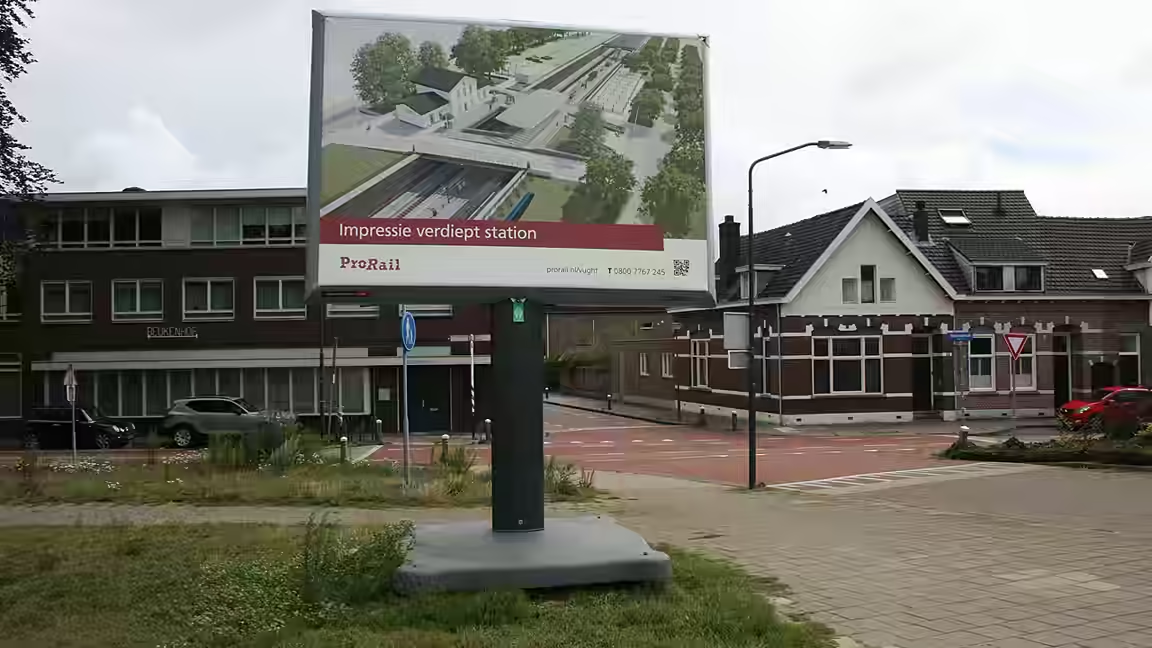
Infrastructure operator ProRail said it recorded more than 35 incidents on Tuesday, affecting routes through Amsterdam and connections serving Schiphol airport, Eindhoven and Utrecht. Trains were cancelled or delayed as crews inspected lines and removed objects, and some locations were blocked again after an initial clearance.
The objects interfered with the railway’s detection systems. According to ProRail, contact between the materials and the rails made computers register the presence of trains, preventing traffic controllers from safely releasing sections of track. That protective response limited movement across the network even where no train was physically occupying the line.
No passenger injuries were reported. ProRail said one train had struck metal near Steenwijk in the east of the country early on Monday, but it was moving at reduced speed and sustained no further reported damage. The operator stressed that placing material on rails creates a serious collision risk regardless of whether the signaling system detects it.
Police launched a criminal investigation, joined by the national public prosecutor’s office and the AIVD intelligence agency. Officials had not identified a suspect or motive. Prime Minister Rob Jetten described the incidents as dangerous as well as disruptive, while investigators worked to determine whether the separate placements were coordinated.
The scale of the interruption also made substitute transport impractical. National passenger operator Nederlandse Spoorwegen said the impact was too broad to provide buses across all affected routes. Closed level crossings added road delays in some areas, extending the consequences beyond rail passengers.
ProRail said no new obstructions had been reported after 1 p.m. local time and that known blockages had been resolved by about 5 p.m., although two lines still showed disruption Tuesday evening. The phased recovery reflected the need to inspect infrastructure and restore confidence in signaling before allowing trains to resume normal operations.
The rail incidents occurred on Prinsjesdag, when the Dutch government presents its budget, and on a day of separate farmer protests over nitrogen policy. Hay bales were set alight beside roads during those demonstrations. Authorities had established no link between the protests and the railway interference. Farmers Defence Force denied organizational responsibility, while saying it could not rule out actions by individuals.
The investigation will now focus on who placed the objects, how the sites were selected and whether the activity was intended to cause transport disruption or physical harm. Until evidence establishes responsibility, the timing and simultaneous political protests do not by themselves explain the sabotage.