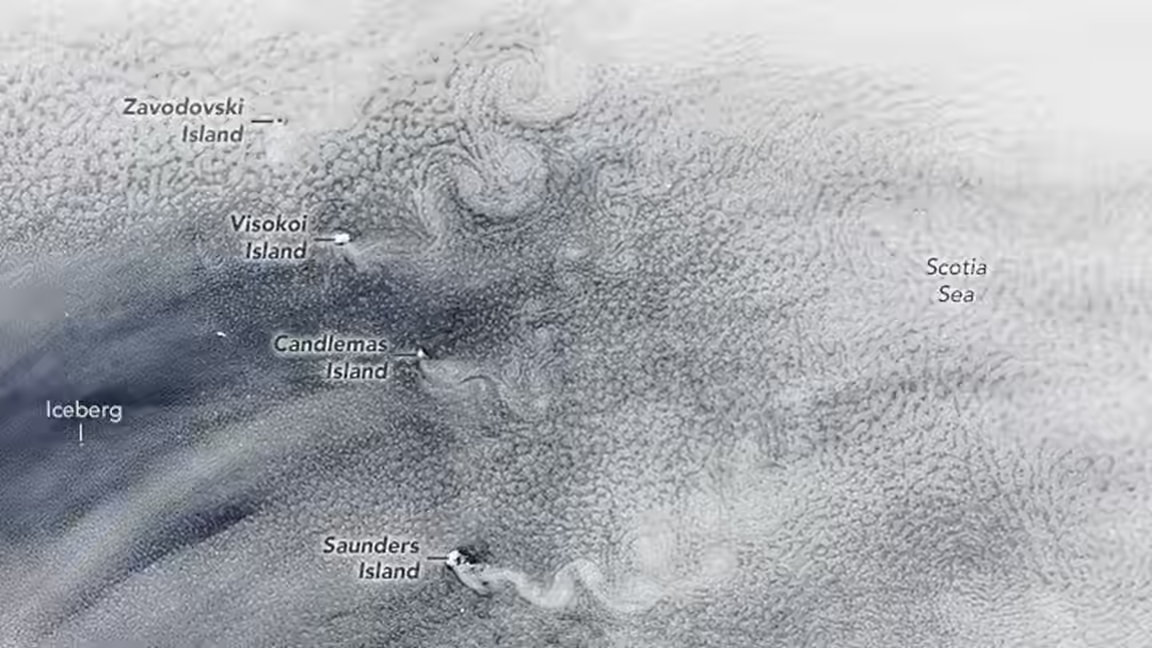
Zavodovski Island has lost roughly two-thirds of its chinstrap penguins since 2011, ending the remote volcanic island’s status as the home of the world’s largest penguin colony.
Drone and satellite surveys found that the number of breeding chinstraps fell from about 1.09 million in January 2011 to 402,000 in 2025. The decline of more than 680,000 birds, or 63%, was reported in a British Antarctic Survey study published in Current Biology and described on the event date of October 7, 2026.
Researchers estimated that the chinstrap population was shrinking at around 7% a year. They warned that the findings may indicate wider losses across the South Sandwich Islands, which contain about 38% of the species’ population.
The change was not shared by Zavodovski’s macaroni penguins. Their population increased from approximately 338,000 in 2011 to 433,000 in 2025, leaving them more numerous than chinstraps on the island. Together, the two species still total more than 835,000 birds there.
Scientists identified changes in food availability as the most plausible explanation. Chinstrap penguins depend heavily on krill, the small crustaceans at the center of Antarctic food webs. Warming ocean conditions have pushed krill toward colder waters farther south, beyond environments that chinstraps favor. Macaroni penguins eat a more varied diet, which may help explain why their numbers moved in the opposite direction.
The study considered whether Mount Curry’s 2016 eruption caused the collapse. Researchers concluded that it was not the main driver: ash traveled northeast over an area without penguin colonies, while the chinstrap decline began before the eruption and continued at a consistent pace afterward.
The contrasting trajectories of the two species provide further support for an ecological explanation rather than a single volcanic disaster. The researchers described the replacement of chinstraps by macaronis as an unusually striking change in penguin community composition at one Antarctic location.
Cape Adare, on the other side of Antarctica, now holds the world’s largest known penguin colony, with more than one million Adélie penguins counted as of 2018.
The British Antarctic Survey team said the scale of the loss supports reconsidering the chinstrap penguin’s conservation status. The International Union for Conservation of Nature currently lists the species as being of least concern, but the researchers suggested an endangered designation may now be appropriate.
That proposal will require assessment beyond one colony. Still, Zavodovski’s long-term measurements show how quickly a population can change when warming alters the food web on which a specialized predator depends.