Equatorial Guinea is extending a two-decade malaria-control program from Bioko Island to its mainland territory and Annobon, seeking to reproduce a sharp decline in infections and child deaths across the country. The expansion is backed by $116 million from the government and businesses and will apply familiar prevention tools alongside intensive local data collection.
Bioko's program combines indoor insecticide spraying, mosquito nets and control of mosquito larvae. Its distinguishing feature is a detailed system for mapping homes, recording cases and tracking when individual properties were treated. With no conventional address system covering the island, program workers created their own household map. Teams then compare case reports with spraying records so interventions can be adjusted as conditions change.
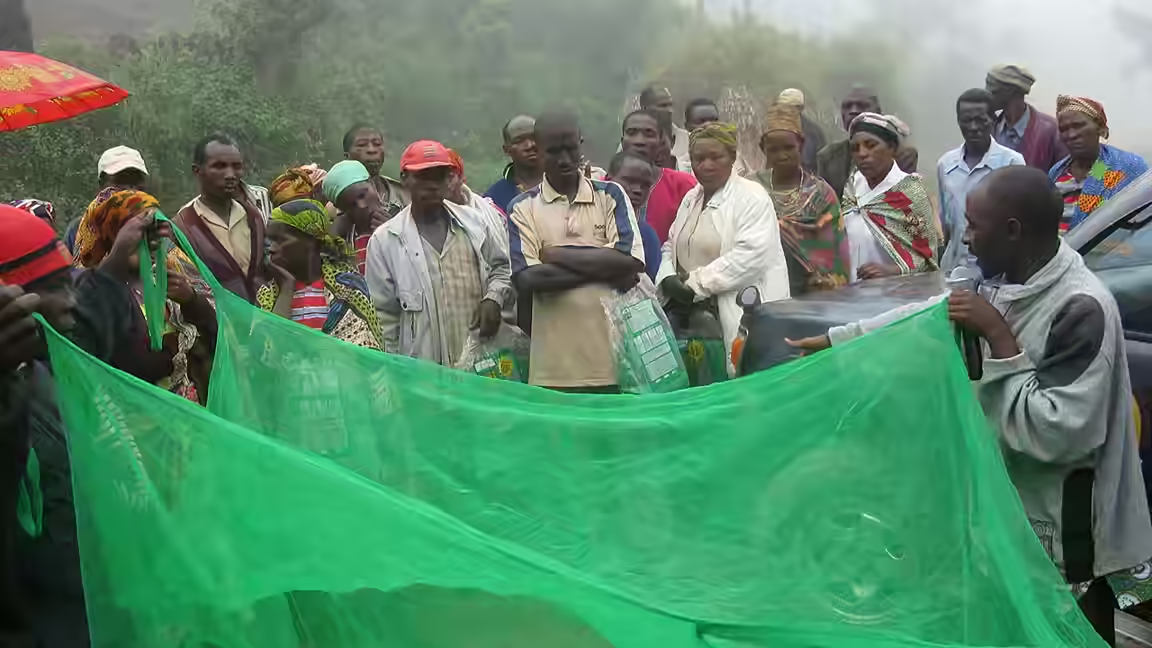
The approach depends heavily on field workers who visit homes, explain the health program and seek permission to spray indoors. Program coordinator Cristina Ngui Otogo said gaining trust can require several attempts because residents respond differently to outreach. The door-to-door work supports both the treatment campaign and the data needed to identify gaps.
Officials say malaria prevalence on Bioko has fallen to about 7 percent from roughly half the population before the program began. Deaths among children under five have declined by 78 percent. Health Minister Mitoha Ondo'o Ayekaba offered his own family as an illustration: he said he was hospitalized repeatedly with malaria as a child, while his children, aged five and seven, have not contracted it.
Financing on Bioko came from the government and US oil companies operating in the country, including ConocoPhillips and Chevron. The partners have invested more than $130 million over two decades. Funding for expansion beyond the island arrived through the newer $116 million commitment covering the mainland and remote Annobon.
The national plan will add the World Health Organization-recommended R21 vaccine for children. Implementers intend to vaccinate 300,000 children and are considering drones to locate mosquito hot spots. Authorities are also evaluating genetically modified mosquitoes being developed by University of California, Davis researchers, although that technology remains a possible addition rather than an established part of the campaign.
Replicating Bioko's results will be difficult. An island can limit imported transmission more readily than a mainland region bordering Cameroon and Gabon, both of which have substantial malaria burdens. The larger and more connected territory will also demand broader surveillance and sustained community participation.
The expansion comes as malaria remains concentrated in Africa. The latest WHO figures cited in the report put global malaria deaths at about 610,000 in 2024, with African countries accounting for 95 percent of cases and deaths. Equatorial Guinea's project will test whether long-term funding, household-level mapping and persistent outreach can translate an island success into a national elimination campaign.