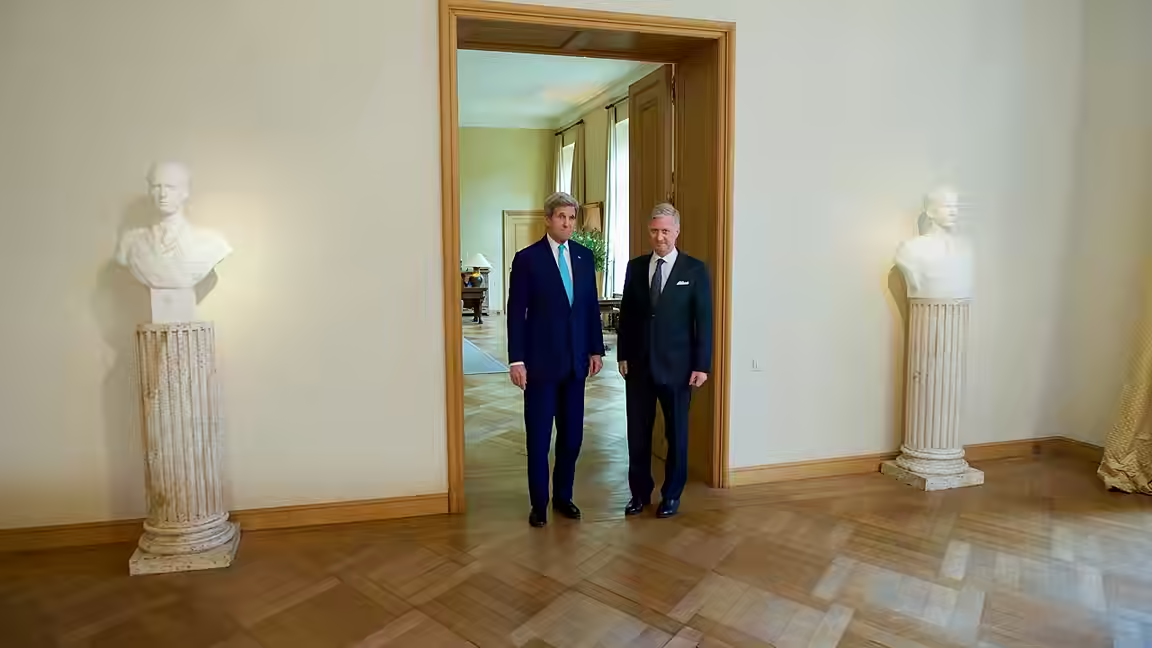
Belgium's King Philippe rejected Prime Minister Bart De Wever's resignation and asked him to restart negotiations aimed at resolving the country's prolonged budget dispute. The decision keeps De Wever's five-party coalition in place while its members make another attempt to agree on spending and revenue measures for 2027 and beyond.
The Royal Palace said the prime minister must immediately resume the talks and report back to the king on November 16. De Wever had submitted his resignation four days earlier after the coalition failed to settle its differences over the next budget. The king initially held the resignation in reserve while he met leaders of the parties supporting the government.
According to the palace, all five leaders told King Philippe that they remained committed to completing the negotiations quickly. They also formally indicated that their parties were willing to make concessions. That assurance provided the basis for the king's decision to refuse the resignation and return responsibility for the talks to De Wever.
The dispute centers on the government's effort to improve Belgium's public finances over the coming years. De Wever is seeking measures worth about €10 billion by 2029 to narrow the deficit. Coalition partners have not agreed on how the burden should be divided between spending restraint and new revenue.
Proposals discussed during the negotiations have included cuts and an increase in value-added tax. The francophone liberal Reformist Movement has opposed the VAT proposal, illustrating the political and regional divisions De Wever must bridge to preserve his government and produce a credible fiscal plan. The coalition contains parties with different economic priorities, making the promised concessions important but not yet equivalent to an agreement.
Belgium's constitutional monarchy gives the king a formal role when a government offers its resignation. By refusing De Wever's request after consulting the majority parties, King Philippe left the current administration responsible for finding a solution instead of opening another government-formation process. The action does not resolve the underlying fiscal choices, which remain with the prime minister and coalition leaders.
The November 16 reporting deadline gives negotiators a defined period to test whether the parties' assurances can be turned into a common three-year path. Failure would renew questions about the coalition's ability to govern and could again place De Wever's position before the king. For now, the government remains in office with a direct instruction to continue bargaining and a public commitment from each majority party to participate.