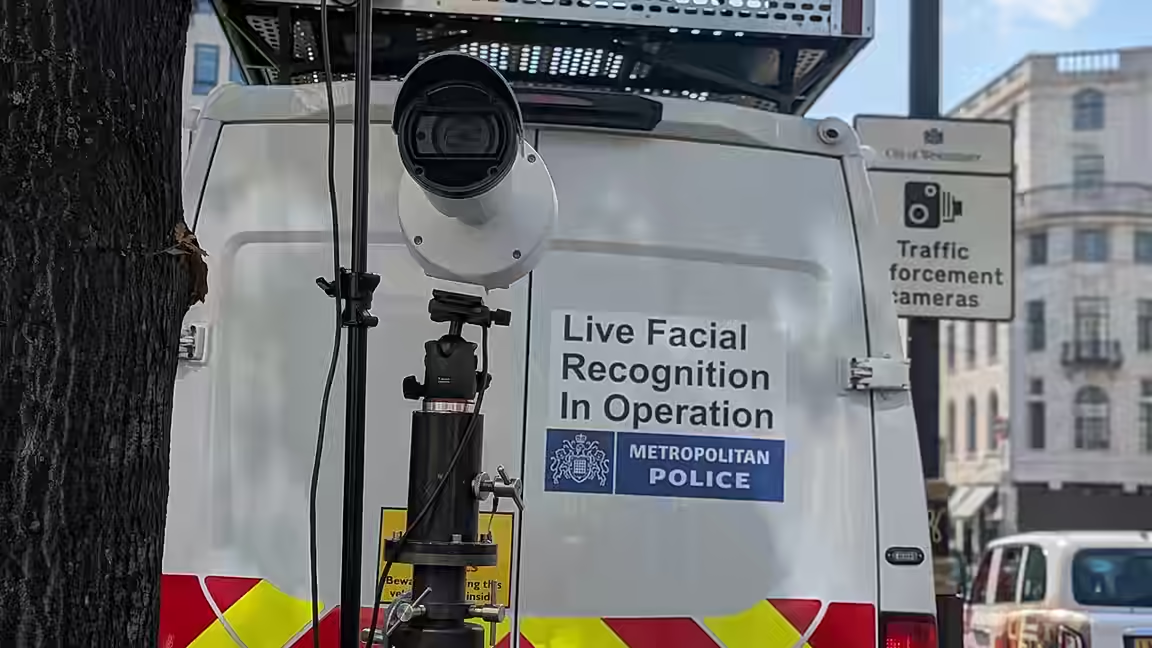
A six-month live facial-recognition trial at London railway stations scanned more than half a million faces but did not produce an arrest directly attributable to the technology, according to records released through a freedom-of-information request. Its only watchlist alert during the period was an incorrect match.
British Transport Police conducted 18 deployments from February through July at some of the capital’s busiest transport hubs. Equipment hire and police staffing cost £320,786 and used almost 100 hours of officers’ time. The system compared passersby with police watchlists intended to identify wanted people and individuals suspected of breaching court orders.
The outcome has intensified questions about whether broad biometric surveillance in public transport is proportionate to the results it delivers. Live facial recognition processes facial information in real time, even though images of people who do not match a watchlist are handled differently from ordinary CCTV recordings. That still involves special-category personal data and places weight on how police select locations, deployment times and watchlist entries.
British Transport Police extended the trial for four months and expanded it to London Underground stations. The force said the later phase generated three confirmed alerts involving people who were found to be complying with sexual-harm prevention orders or other court conditions. Those alerts therefore did not lead to arrests.
Police also reported associated arrests during deployments for alleged assault, theft, possession of an offensive weapon, breach of a criminal-behavior order and public-order offenses. The force stressed that those cases were not triggered by facial-recognition alerts and were therefore excluded from the system’s performance figures.
Officials said the pilot was designed to determine how the technology could help locate wanted offenders and people who might present risks to passengers or staff. The force said it had adjusted operating procedures, locations, equipment and watchlist construction as the trial progressed, beginning with a deliberately limited list while governance and data-quality safeguards were established.
Critics argue that expansion should wait for a clearer legal framework and stronger safeguards. A recent parliamentary human-rights committee report identified live facial recognition as a particularly clear example of the risks artificial intelligence can pose to rights.
The trial’s first six months do not prove that facial recognition can never assist railway policing. They do, however, provide a concrete measure of its performance in this setting: extensive scanning, substantial public expenditure and no arrest resulting from a match. Any continued rollout will face scrutiny over whether different watchlists or deployment choices can materially improve that record without imposing disproportionate privacy costs.