Twelve years of observations reveal a threshold
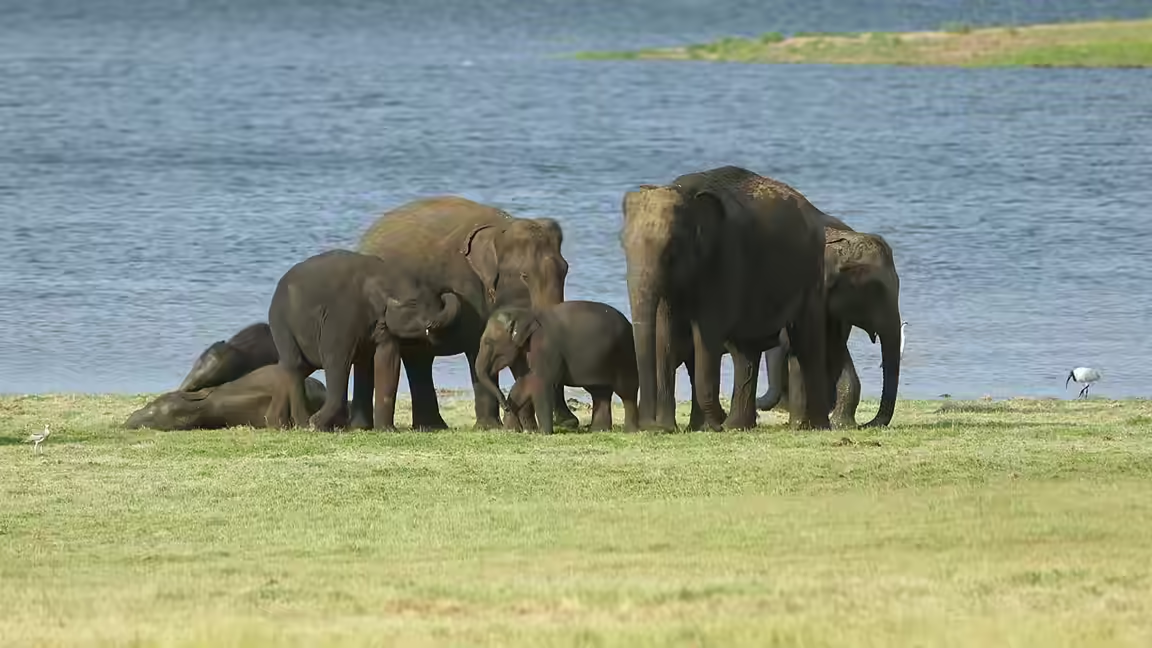
A declining population of wild Asian elephants in Sri Lanka has crossed a social threshold, leaving surviving animals in smaller and less connected communities, according to research led by University of California San Diego scientists. The study tracked more than 440 female elephants in Udawalawe National Park over 12 years and appears in the November 12 issue of Science.
Researchers examined how demographic changes altered relationships across the population. Individual losses accumulated gradually through likely deaths and permanent departures, while too few newcomers arrived to replace them. The social network did not simply shrink at the same steady rate. Instead, the team detected a more sudden transition from larger, densely linked communities to smaller groupings with fewer connections.
Lead author Anastasia Madsen said the remaining elephants naturally had fewer potential relationships as the population fell, but they also changed how they associated with one another. That combination supports the researchers' warning about a tipping point: persistent turnover can build quietly before the structure of a community changes sharply.
The finding is important because Asian elephants use social relationships to find food, share information and care for young. Losing connections can therefore affect more than companionship. A fragmented network may have fewer pathways through which experience and assistance move between animals, potentially reducing the resilience of groups facing further pressure.
Conservation must account for relationships
The study does not assign every departure to a single cause. The researchers identified likely deaths, permanent emigration and a shortage of incoming animals as the immediate demographic pattern. They also noted wider pressures that affect elephant populations, including poaching, conflict with people, disrupted habitat connections and changing food availability across the park and surrounding landscape. Udawalawe National Park covers about 119 square miles.
Madsen warned that a network may be difficult to restore once it has passed such a threshold. Adding or retaining a small number of animals would not necessarily recreate relationships accumulated over years. Associate professor Shermin de Silva, who leads the laboratory behind the work and founded the conservation nonprofit Trunks & Leaves, emphasized that durable communities depend on opportunities to replace relationships lost over time.
The analysis offers conservationists another way to detect trouble. Population totals remain essential, but a headcount alone may conceal deteriorating connections among surviving animals. Monitoring association patterns could reveal when gradual losses are pushing a highly social species toward a more abrupt reorganization.
The team said the results should inform broader studies of animal societies, including efforts to identify vulnerable network structures before changes become hard to reverse. For Asian elephants, the practical implication is that protecting habitat and reducing deaths may also preserve the social architecture through which animals forage, learn and raise their young.