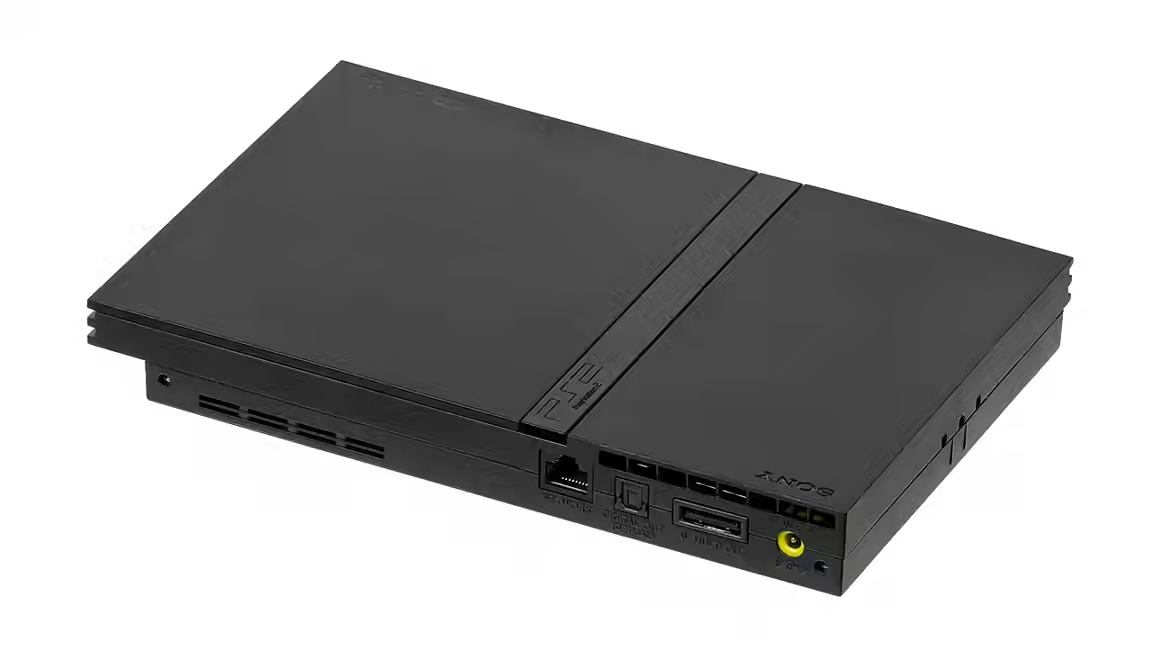
A retro-computing researcher has completed a four-year effort to reverse-engineer and extract the contents of a security-related controller used in the original Sony PlayStation 2. The work targets the CXP102064 MechaCon chip found in the early, full-size version of the console and could give preservationists new options for studying and maintaining ageing hardware.
The researcher, known online as DiscoStarslayer, announced that the chip had been physically analysed and its data dumped. According to Tom's Hardware, the project combined chemical decapping, microscope-assisted inspection and optical extraction of information from the exposed silicon. The researchers then found a software method that enabled the chip's contents to be obtained more directly, building on the imperfect information recovered through optical work.
MechaCon is named for its role in managing the console's drive mechanisms, but its responsibilities extend beyond moving discs. It participates in the PlayStation 2's security system, including functions connected with memory-card authentication and the decryption of executable files. Understanding its internal firmware therefore matters to developers seeking to document how the console verifies media and runs protected software.
The result does not instantly turn every PlayStation 2 into an open platform, and the supplied report does not describe a consumer-ready modification. Its significance is instead technical. A documented controller can help emulator developers reproduce hardware behaviour more accurately, assist homebrew programmers working around undocumented functions and support repair projects as original optical drives fail. Replacement-drive designs may also benefit from knowing how the controller expects other components to behave.
The breakthrough is especially relevant because the earliest PlayStation 2 systems are now more than a quarter-century old. Hardware preservation becomes more difficult as proprietary chips, drives and storage components deteriorate and replacements disappear. Extracted firmware and an account of the chip's operation can preserve knowledge that would otherwise remain locked inside working units.
The same controller technology reached beyond Sony's home console. Modified PlayStation 2 hardware underpinned arcade platforms including Namco's System 246 and System 256 and Konami's Python 1. Those systems used MechaCon firmware in their authentication and encrypted-software processes, making the research potentially useful to arcade preservation as well.
The project illustrates why old security components remain subjects of active research long after a product's commercial peak. Protections that once controlled a closed software market can later become obstacles to documenting, repairing and accurately emulating the machines themselves. In this case, painstaking physical analysis supplied the information that made a more practical software extraction route possible.