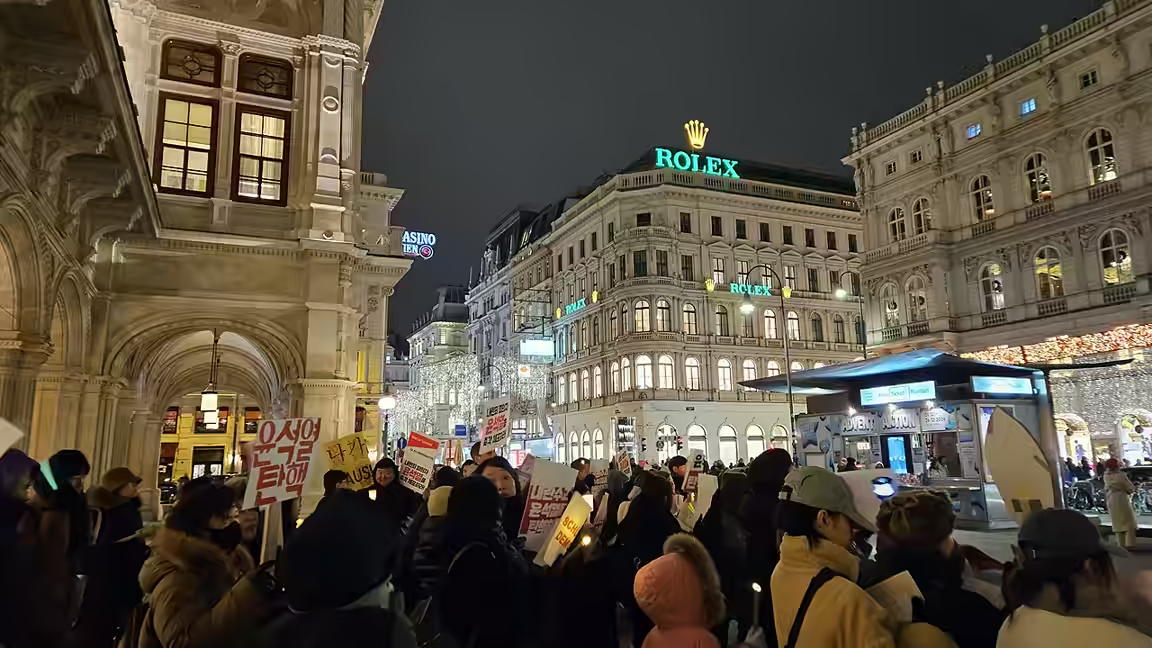
South Korean police blocked access to parliament and confronted demonstrators after President Yoon Suk Yeol announced emergency martial law in a late-night address.
On Dec. 3, 2024, lawmakers in Seoul rejected President Yoon Suk Yeol's martial law declaration after troops and helicopters surrounded the National Assembly and political pressure on the president intensified.
President Yoon Suk Yeol imposed martial law in a televised address, but lawmakers entered the National Assembly and voted against the measure before he reversed course.
With all seats filled, Fianna Fáil remains the biggest party but the two long-dominant center-right parties still need support to govern after a campaign dominated by housing and migration.
A gathering in Chicago’s Gage Park neighborhood turned deadly when eight people were shot, three of them fatally, and police said no motive was immediately known.
Zurab Japaridze was detained after another night of clashes in Tbilisi, where protesters again challenged the government’s decision to suspend EU accession talks.
On Dec. 1, 2024, Iceland's Social Democratic Alliance emerged as the largest party in a snap election, but the result left no party or bloc with a majority.
On Dec. 1, 2024, clashes after a German fourth-division match in Jena left 79 people injured, including police officers, stewards and fans from both clubs.
The president issued a full and unconditional pardon for his son after saying for months that he would not do so, reigniting debate over justice, politics and family power.
An explosion near Zubin Potok disrupted a water route serving power generation and communities, prompting raids and competing accusations from Pristina and Belgrade.
Romania’s Constitutional Court ordered election authorities to recount all ballots from the first round of the presidential race after a complaint from candidate Cristian Terheș.
![37th Smart National Taekwondo Championships [1] SMART national taekwondo tourney set July 20, 21 , Philippine Sports Commission, - in -- the Rizal Memorial Coliseum [2] The Rizal…](/media/articles/commons-c136587fcea8.avif)
![37th Smart National Taekwondo Championships [1] SMART national taekwondo tourney set July 20, 21 , Philippine Sports Commission, - in -- the Rizal Memorial Coliseum [2] The Rizal…](/media/articles/commons-a533daacad30.avif)