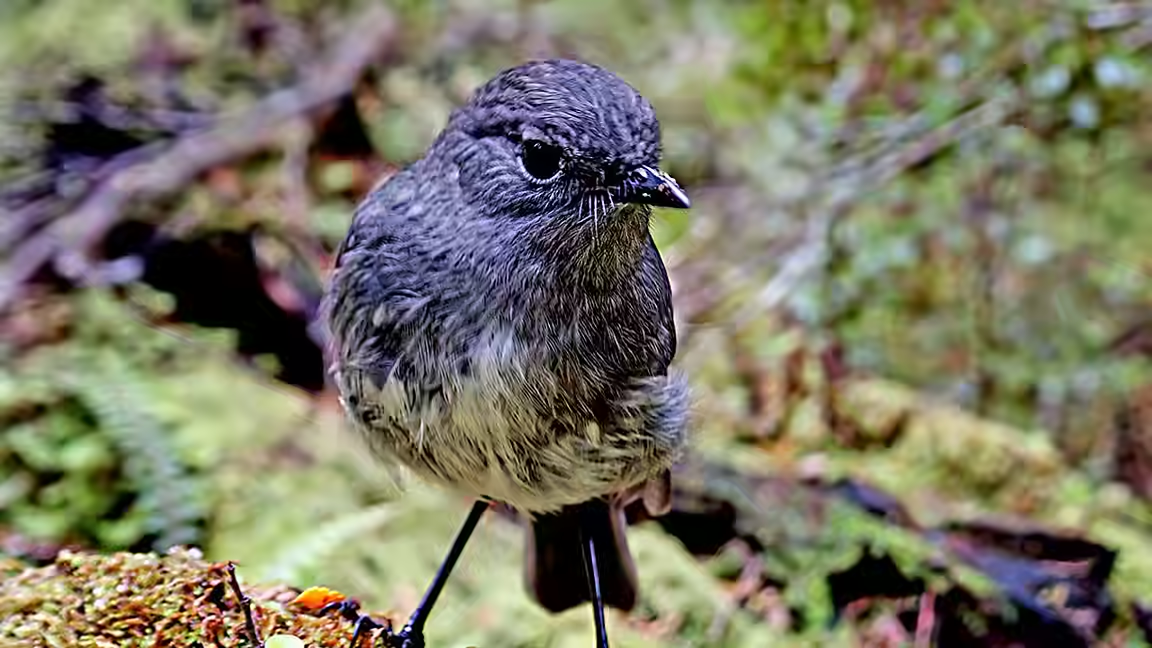
New Zealand’s black robin has won the country’s Bird of the Year competition, adding a popular-vote title to one of the nation’s most striking conservation recoveries. The small, critically endangered bird received more than 26,000 votes, according to the conservation organization Forest & Bird, which runs the annual campaign.
About 105,000 people participated, a record total for the contest. Forest & Bird’s Rebecca Hatch said the figure amounted to roughly one in every 50 New Zealanders. The black robin finished ahead of the kakapo, a flightless parrot, and the karearea, New Zealand’s native falcon, which took second and third place respectively.
The winner lives on the remote Chatham Islands, about 800 kilometers east of the South Island. Its present population of approximately 350 remains small, but it represents a dramatic improvement from 1980, when only five birds survived and just one was a breeding female. That bottleneck made the species a global symbol of intensive conservation and left every living black robin descended from the same female.
This year’s campaign was organized by the Chatham Islands Landscape Restoration Trust. The group is seeking to establish a third habitat for the species, a step intended to broaden its occupied range and reduce the risks that come with concentrating a tiny population in very few places. The competition gives such projects visibility as well as an opportunity to explain why recovery numbers do not mean a species is secure.
Bird of the Year has evolved into a prominent public campaign, combining conservation education with the energy and rivalry of an election. Its history includes unusual international attention. In 2019, votes arriving from Russian internet addresses prompted accusations of interference, although Forest & Bird concluded that most were legitimate and did not change the yellow-eyed penguin’s victory. In 2023, comedian John Oliver promoted the puteketeke to his television audience, helping the water bird win.
Organizers said this year’s record participation was not the product of foreign interference. Instead, the vote put the focus back on a native species whose survival depended on sustained human intervention. The black robin’s rise from five individuals to about 350 is an exceptional achievement, but its critically endangered classification underscores the work still required.
The title itself carries no formal protection, yet the attention can help conservation groups build support for habitat restoration and long-term monitoring. For the black robin, the immediate objective is not simply a larger count. Creating another viable habitat could make the population more resilient to disease, severe weather or other localized threats. The public vote gives that practical conservation goal a national audience.