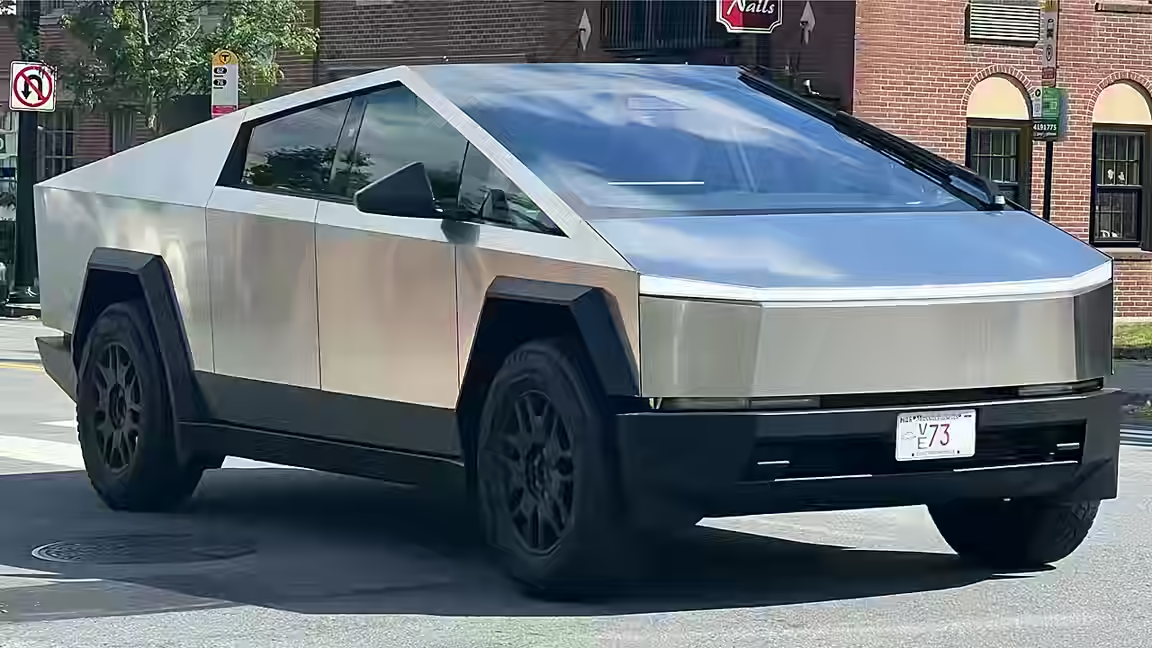
Tesla plans to wind down Cybertruck production at its Texas factory around the middle of 2027, shifting manufacturing capacity toward the Cybercab that underpins the company's robotaxi strategy. Elon Musk announced the change in a post on X, according to WIRED, bringing the stainless-steel pickup's short and frequently troubled production run toward an end.
The wording leaves some uncertainty over whether Cybertruck manufacturing will stop completely or merely fall to a minimal level. WIRED said Tesla had not responded to its request for clarification. The truck is made exclusively at Gigafactory Texas, where specialized equipment handles its unusual stainless-steel body, so the announced reallocation would directly affect its only production site.
Cybertruck entered customer production less than four years before the planned wind-down. The model drew enormous attention for its sharply angular design and generated a large reservation list before launch, but sales did not match the early enthusiasm. WIRED cited Kelley Blue Book data reported by EVWire showing 11,586 U.S. sales in the first three quarters of 2026, 28 percent lower than the comparable period a year earlier.
The vehicle also accumulated recalls and manufacturing problems. A 2024 recall addressed an accelerator-pedal pad that could come loose and become trapped by interior trim. A later action covered a stainless-steel exterior panel that could detach while driving. WIRED also described a 2026 recall involving brake-rotor stud holes on the rear-wheel-drive Long Range model, a fault that could allow a stud to separate from the wheel hub.
Those issues followed development difficulties documented before the truck reached buyers. WIRED previously reported on a leaked 2022 Tesla assessment that identified concerns involving suspension, sealing, noise, handling and braking in a preproduction vehicle. The production version nevertheless attracted a committed group of owners, making the planned phaseout a significant change for one of Tesla's most distinctive products.
Musk linked the decision to Cybercab rather than directly to Cybertruck sales or reliability. Tesla has increasingly framed its future around autonomous vehicles and robotics, and Cybercab is designed as a purpose-built two-seat vehicle for robotaxi service. The company currently operates its service in Austin and wants to increase production substantially.
Cybertruck lead engineer Wes Morrill said the pickup served as a technology development platform whose work would continue through Cybercab. That claim suggests Tesla sees manufacturing and engineering lessons from the truck as transferable even if the vehicle itself leaves the line.
The schedule remains forward-looking and could change. For now, the clearest confirmed point is Musk's stated intention to reduce Cybertruck output around mid-2027 so that the Texas plant can build more Cybercabs.